The Haunted History of Halloween
All written and visual material on this page and in the accompanying PowerPoint program is intended for limited educational use only and not for broad distribution or copying. This page and program follow the Fair Use rules as outlined by the American Library Association.
Halloween: Overview
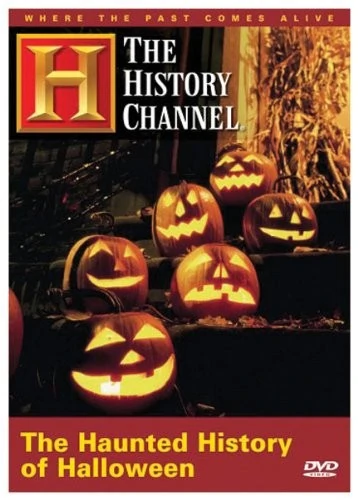
Halloween is a holiday observed on October 31 and noted for its pagan and religious roots and secular traditions. In much of Europe and most of North America, observance of Halloween is largely nonreligious, celebrated with parties, spooky costumes, jack-o’-lanterns, pumpkin carvings, and the giving of candy. But the holiday also marks the beginning of All-Hallow-Tide, a three-day Christian triduum dedicated to remembering the dead that begins with Halloween (October 31) and is followed by All Saints’ Day (November 1) and All Souls’ Day (November 2). Halloween had its origins in the festival of Samhain among the Celts of ancient Britain and Ireland. On the day corresponding to November 1 on contemporary calendars, the new year was believed to begin. That date was considered the beginning of the winter period, the date on which the herds were returned from pasture and land tenures were renewed. During the Samhain festival the souls of those who had died were believed to return to visit their homes, and those who had died during the year were believed to journey to the otherworld. People set bonfires on hilltops for relighting their hearth fires for the winter and to frighten away evil spirits, and they sometimes wore masks and other disguises to avoid being recognized by the ghosts thought to be present. It was in those ways that beings such as witches, hobgoblins, fairies, and demons came to be associated with the day. The period was also thought to be favourable for divination on matters such as marriage, health, and death. When the Romans conquered the Celts in the 1st century ce, they added their own festivals of Feralia, commemorating the passing of the dead, and of Pomona, the goddess of the harvest. In the 7th century CE, Pope Boniface IV established All Saints’ Day, originally on May 13, and in the following century, perhaps in an effort to supplant the pagan holiday with a Christian observance, it was moved to November 1. The evening before All Saints’ Day became a holy, or hallowed, eve, from which the word "Halloween" evolved. By the end of the Middle Ages, the secular and the sacred days had merged. The Reformation essentially put an end to the religious holiday among Protestants, although in Britain especially Halloween continued to be celebrated as a secular holiday. Along with other festivities, the celebration of Halloween was largely forbidden among the early American colonists, although in the 1800s there developed festivals that marked the harvest and incorporated elements of Halloween. When large numbers of immigrants, including the Irish, went to the United States beginning in the mid 19th century, they took their Halloween customs with them, and in the 20th century Halloween became one of the principal U.S. holidays, particularly among children. As a secular holiday, Halloween has come to be associated with a number of activities. One is the practice of pulling usually harmless pranks. Celebrants wear masks and costumes for parties and for trick-or-treating, thought to have derived from the British practice of allowing the poor to beg for food, called “soul cakes.” Trick-or-treaters go from house to house with the threat that they will pull a trick if they do not receive a treat, usually candy. Halloween parties often include games such as bobbing for apples, perhaps derived from the Roman celebration of Pomona. Along with skeletons and black cats, the holiday has incorporated scary beings such as ghosts, witches, and vampires into the celebration. Another symbol is the jack-o’-lantern, a hollowed-out pumpkin, originally a turnip, carved into a demonic face and lit with a candle inside.
Suggested Media
.jpg "image title")
.jpg "image title")
.jpg "image title")
.jpg "image title")
Selected Bibliography
• Diane C. Arkins, Halloween: Romantic Art and Customs of Yesteryear, Pelican Publishing Company (2000). 96 pages. ISBN 1-56554-712-8• Diane C. Arkins, Halloween Merrymaking: An Illustrated Celebration Of Fun, Food, And Frolics From Halloweens Past, Pelican Publishing Company (2004). 112 pages. ISBN 1-58980-113-X• Lesley Bannatyne, Halloween: An American Holiday, An American History, Facts on File (1990, Pelican Publishing Company, 1998). 180 pages. ISBN 1-56554-346-7• Lesley Bannatyne, A Halloween Reader. Stories, Poems and Plays from Halloweens Past, Pelican Publishing Company (2004). 272 pages. ISBN 1-58980-176-8• Phyllis Galembo, Dressed for Thrills: 100 Years of Halloween Costumes and Masquerade, Harry N. Abrams, Inc. (2002). 128 pages. ISBN 0-8109-3291-1• Lisa Morton, The Halloween Encyclopedia, McFarland & Company (2003). 240 pages. ISBN 0-7864-1524-X• Nicholas Rogers, Halloween: From Pagan Ritual to Party Night, Oxford University Press, USA (2002). ISBN 0-19-514691-3• Jack Santino (ed.), Halloween and Other Festivals of Death and Life, University of Tennessee Press (1994). 280 pages. ISBN 0-87049-813-4• David J. Skal, Death Makes a Holiday: A Cultural History of Halloween, Bloomsbury USA(2003). 224 pages. ISBN 1-58234-305-5• James Tipper, Gods of The Nowhere: A Novel of Halloween, Waxlight Press (2013). 294 pages. ISBN 978-0988243316
Web Resources: Print
OVERVIEW: https://www.worldhistory.org/article/1456/history-of-halloween/
OVERVIEW: http://www.loc.gov/folklife/halloween.html
OVERVIEW: https://en.wikipedia.org/wiki/Halloween
OVERVIEW: https://www.livescience.com/40596-history-of-halloween.html
OVERVIEW: https://www.history.com/articles/history-of-halloween
TIMELINE: http://www.nydailynews.com/life-style/timeline-origin-halloween-article-1.2406149
SAMHAIN: https://en.wikipedia.org/wiki/Samhain
SAMHAIN: https://irishmyths.com/2022/08/11/samhain/
Web Resources: Video
OVERVIEW: https://www.youtube.com/watch?v=UyOqOa440l4
OVERVIEW (NATGEO): https://www.youtube.com/watch?v=R-VRAemIvbI&t=27s
HISTORY CHANNEL DOCUMENTARY (45 minutes): https://www.youtube.com/watch?v=Wybawp-vEL4
HALLOWEEN TRADITIONS: https://www.youtube.com/watch?v=QjiQCnE4G8Y
CELTIC ORIGINS: https://www.youtube.com/watch?v=AxX1SZVpCd0
SAMHAIN HISTORY: https://www.youtube.com/watch?v=fRkq8_nhFQw
HISTORY OF JACK-O-LANTERN: https://www.youtube.com/watch?v=vyp_Luc0wB8
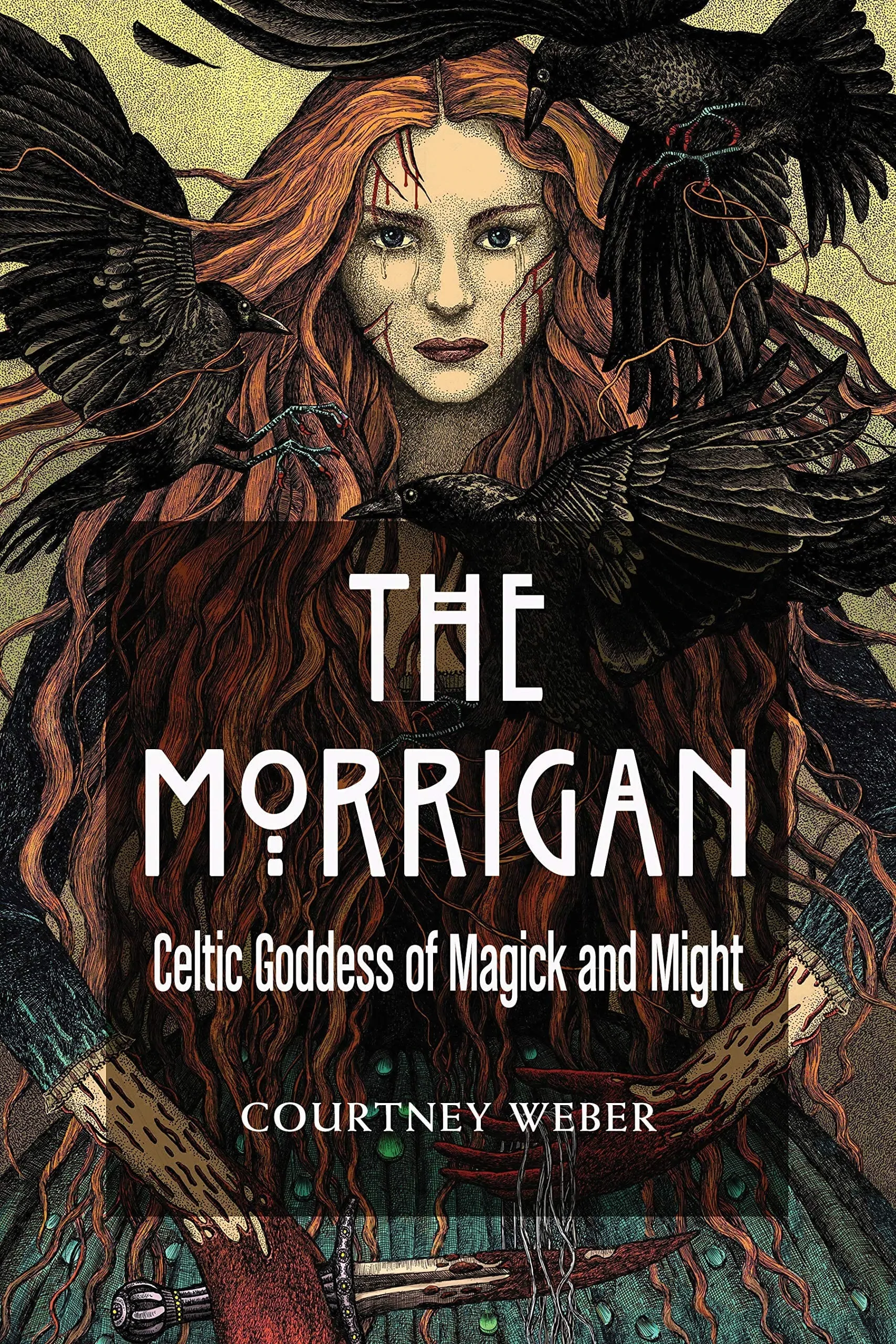
THE MORRIGAN: https://www.youtube.com/watch?app=desktop&v=9vrQIS0C5Xw
A HISTORY OF THE MORRIGAN: https://www.youtube.com/watch?v=dm1TM_6Gqo8
MORRIGAN OVERVIEW: https://www.youtube.com/watch?v=6Gxkjxle6MA
Samhain: Overview
Samhain is a Gaelic festival marking the end of the harvest season and beginning of winter or "darker-half" of the year. In the northern hemisphere, it is held on 1 November, but with celebrations beginning on the evening of 31 October, as the Celtic day began and ended at sunset. This is about halfway between the autumn equinox and winter solstice. It is one of the four quarter days associated with Gaelic seasonal festivals, along with Imbolc, Beltane and Lughnasa. Historically, it was widely observed throughout Ireland, Scotland, and the Isle of Man (where it is called 'Sauin'). A similar festival was held by the Brittonic Celtic people, called Calan Gaeaf in Wales, Kalan Gwav in Cornwall, and Kalan Goañv in Brittany.
Samhain is believed to have Celtic pagan origins, and some Neolithic passage tombs in Ireland are aligned with the sunrise at the time of Samhain. It is first mentioned in the earliest Irish literature, from the 9th century, and is associated with many important events in Irish mythology. The early literature says Samhain was marked by great gatherings and feasts, and was when the ancient burial mounds were open, which were seen as portals to the Otherworld. Some of the literature also associates Samhain with bonfires and sacrifices.
The festival did not begin to be recorded in detail until the early modern era. It was when cattle were brought down from the summer pastures and when livestock were slaughtered. As at Beltaine, special bonfires were lit. These were deemed to have protective and cleansing powers, and there were rituals involving them. Like Beltaine, Samhain was a liminal or threshold festival, when the boundary between this world and the Otherworld thinned, meaning the Aos Sí (the 'spirits' or 'fairies') could more easily come into our world. Most scholars see the Aos Sí as remnants of pagan gods. At Samhain, they were appeased with offerings of food and drink, to ensure the people and their livestock survived the winter. The souls of dead kin were also thought to revisit their homes seeking hospitality, and a place was set at the table for them during a Samhain meal. Mumming and guising were part of the festival from at least the early modern era, whereby people went door-to-door in costume reciting verses in exchange for food. The costumes may have been a way of imitating, and disguising oneself from, the Aos Sí. Divination was also a big part of the festival and often involved nuts and apples. In the late 19th century, John Rhys and James Frazer suggested it was the "Celtic New Year", but this is disputed.
In the 9th century, the Church had shifted the date of All Saints' Day to 1 November, while 2 November later became All Souls' Day. Over time, it is believed that Samhain and All Saints'/All Souls' influenced each other, and eventually syncretised into the modern Halloween. Folklorists have used the name 'Samhain' to refer to Gaelic 'Halloween' customs up until the 19th century.
Since the later 20th century, Celtic neopagans and Wiccans have observed Samhain, or something based on it, as a religious holiday.
13 Fun Facts
1. Once upon a time: Believe it or not, the birthplace of Halloween is not a sugar factory: The holiday has been around for about 6000 years and it is believed to have originated around 4000 B.C. in Ireland.
2. Dead or alive: Halloween has its origins in the ancient Celtic festival of “Samhain” – the celebration of the end of harvest season. Back then, the Gaels believed that on October 31, the boundaries between the worlds of the living and the dead got a little blurry and the dead would come back to life and wreak havoc among the living. One way to scare the dead? Wear costumes and masks.
3. Ka-Ching! Right behind Christmas, Halloween is the second most commercial holiday in the US: Americans spend about $6.9 billion on Halloween – most of it for candy, costumes and parties. A surprisingly big chunk is also invested in Halloween costumes for pets.
4. What does the Titanic have to do with it? Out of the $6.9 billion spent annually in the US alone, $2.08 billion are spent on Halloween candy. How many sweet treats can you buy with that money? Roughly 600 million pounds – which equals about 6 Titanic ships.
5. Candy breakdown: The average American eats about 3.4 pounds of Halloween candy – the weight of a small chihuahua in a Halloween costume!
6. Let’s talk about sugar: Trick-or-treating, aka dressing up and asking the neighbors for candy, can be a deliciously successful endeavor: Kids consume about 7000 calories on Halloween. (You would have to eat 66 bananas to reach 7000 calories.)
7. Boo! Are you afraid of Halloween? Then you might suffer from Samhainophobia – the fear of Halloween.
8. Which witch? Try wearing your clothes inside out and walk backwards on Halloween. According to traditions, this will make sure you see a witch at midnight.
9. A big ol’ pumpkin: The world’s heaviest pumpkin grew in a Swiss garden: It weighed 2,096 pounds – as much as a small car.
10. Jack O’Lanterns: Pumpkins and Halloween go together like candy and Halloween: Carving pumpkins on Halloween is not only fun, it’s also believed to scare away evil spirits, so carve away!
11. Follow the rules: Trick-or-treating is really only for kids: Some cities in the US have even gone as far as banning kids over the age of 12 from trick-or-treating. In some places, teenagers who cheat and trick-or-treat can face a fine up to $1000. (7,000 calories worth of candy is surely not worth the fine!)
12. Itsy bitsy spider: Don’t be scared if you see a spider on Halloween: This is believed to be the spirit of a deceased loved one who is watching over you.
13. You (probably) spelled it wrong all along: And yes, we did too. The correct spelling of Halloween is actually Hallowe’en.
See: https://www.ef.edu/blog/language/13-thrilling-facts-bet-didnt-know-halloween/
The Spiritual Connection for Christians
The true origins of Halloween lie with the ancient Celtic tribes who lived in Ireland, Scotland, Wales and Brittany. For the Celts, November 1 marked the beginning of a new year and the coming of winter. The night before the new year, they celebrated the festival of Samhain, Lord of the Dead. During this festival, Celts believed the souls of the dead, including ghosts, goblins and witches, returned to mingle with the living. In order to scare away the evil spirits, people would wear masks and light bonfires.
When the Romans conquered the Celts, they added their own touches to the Samhain festival, such as making centerpieces out of apples and nuts for Pomona, the Roman goddess of the orchards. The Romans also bobbed for apples and drank cider, traditions which may sound familiar to you. But where does the Christian aspect of the holiday come into play? In 835, Pope Gregory IV moved the celebration for all the martyrs (later all saints) from May 13 to November 1. The night before became known as All Hallow’s Eve. Eventually the name was shortened to the current Halloween. On November 2, the Church celebrates All Souls Day.
The purpose of these feasts is to remember those who have died, whether they are officially recognized by the Church as saints or not. It is a celebration of the communion of saints, which reminds us that the Church is not bound by space or time.
The Catechism of the Catholic Church says that through the communion of saints, a perennial link of charity exists between the faithful who have already reached their heavenly home, those who are expiating their sins in purgatory and those who are still pilgrims on earth. Between them there is, too, an abundant exchange of all good things.
https://www.franciscanmedia.org/st-anthony-messenger/halloween-and-its-christian-roots/